
- Tips
- technology
- Frequently Asked Questions
- Tests
- mAh capacity
- Rated Capacity
- comparison
- everActive
- Batteries vs rechargeable batteries
- Accumulated energy
- Durability of rechargeable batteries
- Efficiency of rechargeable batteries
- battery voltage
- LR03 AAA
- LR6 AA
- eneloop
- AG13 LR1154 LR44
- CR 2032
- Delta V
- Charge Cycles
- internal resistance
- charge level
- memory effect
- accredited test
- SR44 357
- Hearing Batteries 675
- SR626 377
- Watch Batteries
- Polarity
- Mah
- passivation
- LS 14250
- LS 14500
Is it worth discharging Ni-MH batteries before each charging?



Definitely no. Completely discharging a Ni-MH battery before each charge effectively reduces its lifespan.
Regularly discharging batteries was recommended for old, practically unavailable nickel-cadmium (Ni-Cd) batteries. Performing a forced deep discharge cycle eliminated and minimized the risk of the so-called memory effect in this type of batteries.
In modern nickel-metal hydride (Ni-MH) batteries, it looks completely different.
To explain this topic thoroughly, we need to go back in time when Ni-Cd cells were commonly used.
Many readers have probably encountered the term "memory effect" of a battery.
The memory effect, characteristic of older Ni-Cd batteries, resulted in a decrease in the usable capacity of the batteries. An example cell discharged regularly only to 25% "remembered" the moment when the battery was disconnected and recharged. During later use, the battery remembered the moment it was disconnected and, even when discharged only to 25%, showed signs of an empty cell (there was a noticeable drop in voltage). In practice, it was difficult to utilize the remaining 75% of the capacity still in the battery.
More about the memory effect and its relation to newer Ni-MH batteries is discussed in our next article.
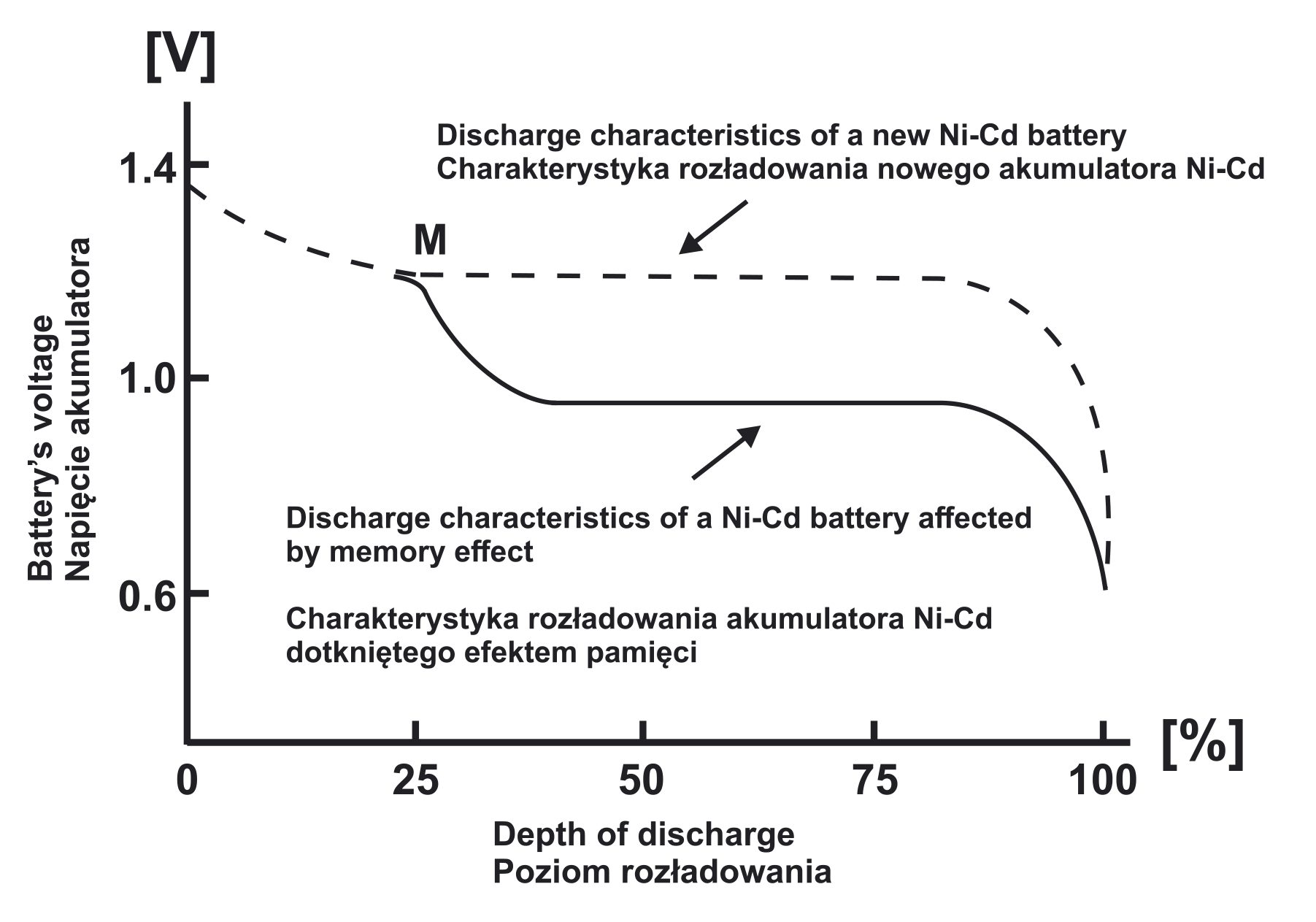
Fig.1 Discharge characteristics of a Ni-Cd battery.
A preventive method for this unwanted phenomenon was an additional, forced discharge of such a battery to a voltage level of 0.9V, sometimes even lower. Many users recommended such a discharge before each charging of the battery.
Currently produced Ni-MH batteries are not as susceptible to the memory effect. In their case, there is sometimes talk of the lazy battery effect, which involves an apparent increase in the internal resistance of the battery and a decrease in its performance. However, the nature of this change is much milder and not as permanent as in the case of Ni-Cd batteries.
Discharging Ni-MH batteries before each charging leads to their much faster wear.
An average Ni-MH battery, when regularly discharged to 50%, lasts about 4 times more charging cycles compared to one that is completely discharged each time (to a level of 1.0V). It is easy to calculate that from the same battery, one can obtain a total of 100% more capacity during its life cycle.
An additional problem that reduces the lifespan of Ni-MH batteries is the way the discharge mode is implemented in some popular chargers. Many of these chargers were designed for Ni-Cd batteries. In such chargers, the actual discharge voltage threshold may be too low for Ni-MH batteries, and after the discharge mode ends, the battery is automatically charged to full. This seemingly convenient discharge mode has appealed to many users to the extent that batteries are still quite often "charged" this way and unfortunately "killed" each time. The chart below shows what a poorly conducted discharge process of a heavily used Ni-MH battery in a popular charger looks like.
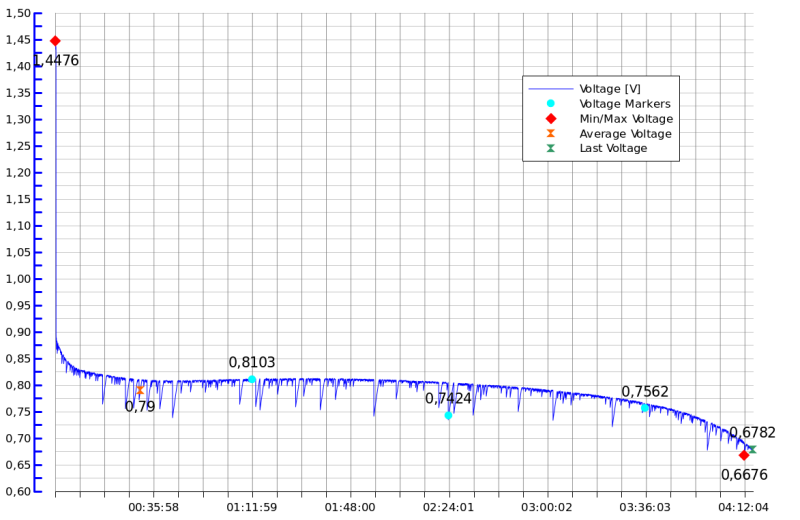
Fig.2 Discharge characteristics of a used Ni-MH battery in the Technoline BC-700 charger.
The charger is supposed to discharge the battery to 0.9V according to specifications, but in practice, the minimum discharge voltage in this case was clearly below 0.7V. The charger also incorrectly assessed the usable capacity of the battery in this case.
Such a low discharge threshold is too low for Ni-MH batteries and leads to even faster degradation of such a battery.
We certainly encourage you to monitor the condition of your batteries. With the right charger, there is nothing stopping you from discharging the battery while measuring its capacity, etc. However, discharge modes should absolutely not be overused.
There is no point in forcing the discharge of a Ni-MH battery more often than once every 5 charging cycles or more often than once every six months - this is entirely sufficient to monitor the degree of wear of the batteries and keep them in reasonably good condition.
Popular Ni-MH batteries and chargers at hurt.com.pl:
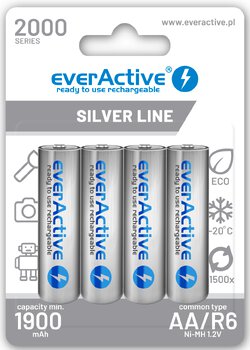
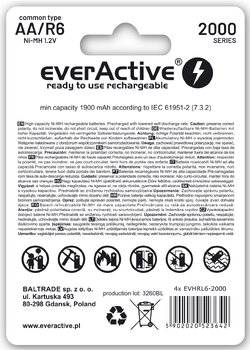
4 x AA / R6 everActive Ni-MH 2000 mAh rechargeable batteries ready to use "Silver line"
- excellent batteries at a low price
- 4pcs - factory consumer packaging - blister
- tested performance - real capacity
- pre-charged batteries, next generation made with Ready To Use technology
- highest quality of batteries confirmed by numerous tests
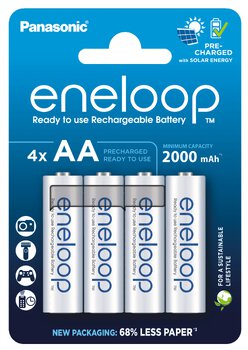
4 x AA / R6 Panasonic Eneloop Ni-MH 2000mAh BK-3MCDE/4BE (blister)
- higher capacity min. 2000 mAh
- up to 2100 charging cycles
- retains 70% energy after 10 years from charging!
- operates in low temperatures down to -20°C!
- charged in the production process with solar energy
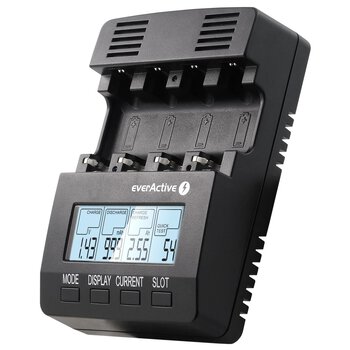
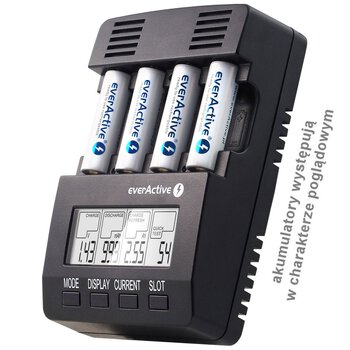
Ni-MH rechargeable battery charger everActive NC-3000
- the most advanced Ni-MH battery charger from everActive
- processor-controlled with discharge and capacity measurement and unique internal resistance test of the cell,
refreshing, maintenance, and conditioning functions for batteries, - min. charging time for 4 batteries 2500mAh - 3h.
- supported batteries: Ni-MH, Ni-Cd, 1-4x R6/AA, R03/AAA, 1-2x R14/C, R20/D using an optional adapter
- input voltage 12V DC - includes AC power adapter, optional car adapter available
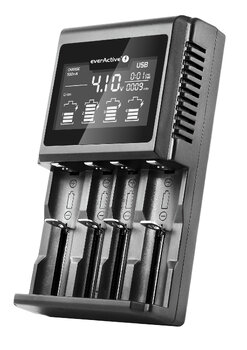
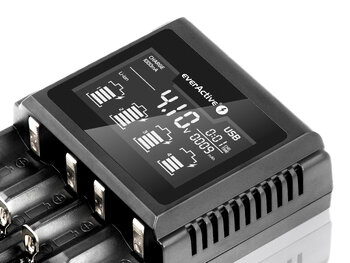
everActive UC-4000 charger for Li-ion and Ni-MH cylindrical batteries
- professional, universal processor charger for Li-ion, Li-FePO4, Ni-MH cells,
- function of discharging and refreshing cells,
- unique function of measuring and reviewing two capacity values for each battery - Capacity Review,
- supported sizes: R6 AA, R03 AAA, R14 C, R20 D, 10440, 14500, 14650, 17500, 17670, 18350, 18500, 18650, 20700, 21700 - unsecured only, 22650, 25500, 26500, 26650, 32650, 33600, 16340 R-CR123e,
- charging current: 500 mA, 1000 mA for Li-ion / Li-FePO4, 500 mA for Ni-MH,
- Very accurate charging control regardless of the type of battery.
Author: Michał Seredziński
Copying the content of this text or any part of it without the consent of a representative of Baltrade sp. z o.o. is prohibited.
-
Hmm... kiedyś BC-700 była uważana za jedną z pierwszych niezłych ładowarek mikroprocesorowych... A wychodzi na to, że psuła. Jaki model teraz jest uważany za "standard"? Na obecny stan wiedzy, oczywiście.1191
2
0
-
BC-700 nie była "złą" ładowarką jednak sprzyjała ona m.in. nadużywaniu trybu rozładowania, który niestety pomijał w dużym stopniu fakt istnienia rezystancji wewnętrznej danego akumulatorka. To w połączeniu ze zbyt niskim domyślnym prądem ładowania mogło w dłuższej perspektywie przyspieszać zużycie akumulatorków i powodować szybsze pogorszenie ich wydajności.
Efektem wtórnym były w tej ładowarce zbyt optymistyczne wyniki testów pojemności osiąganych nawet na wieloletnich akumulatorkach, które mogły być już mocno zawodne.
Ładowarką najbliższą funkcjonalnie do BC-700, jednak z naprawionymi błędami "logicznymi" jest model NC-1000 Plus marki everActive. Nieco uproszczonym i unowocześnionym wariantem jest z kolei NC-1000M.
1192
4
0
-
-
Witam. Mam problem z akumulatorkami AAA eneloop 750mAh. Po półtora roku użytkowania, 3 szt. odmówiły współpracy. Na ładowarce NC-1000 plus wyświetla się komunikat "null". Akumulatory używane w zabawkach dziecka. Prawdopodobnie zostały zbyt mocno rozładowane. Czy jest sposób na ich "naprawę" ww. ładowarką, czy potrzeba czegoś bardziej zaawansowanego? Poproszę o pomoc, bo prawdopodobnie taki los będzie czekał więcej moich akumulatorów.1158
3
0
-
Model NC-1000 wykrywa akumulatorki dość "nisko" bo już od napięcia ok. 0,4V. Jednak zdarza się, że akumulatorek zostanie rozładowany do napięcia 0V, albo nawet zostanie przebiegunowany. W tym drugim wypadku większość zaawansowanych ładowarek odmówi ładowania takiego akumulatorka.
Można jednak z tym problemem sobie poradzić - opisujemy to w innym wpisie: https://www.hurt.com.pl/blog/fakty-i-mity-o-ladowaniu-akumulatorkow-ni-mh-porady-dla-uzytkownikow-akumulatorkow-ni-mh-najczestsze-pytania-i-problemy-64#p11160
2
0
-
-
Dziękuję bardzo za powyższy artykuł. Spowodował on u mnie wątpliwości po przeczytaniu innego zalecenia w artykule pod tym linkiem https://www.gimmik.net/blog/akumulatory-nimh-budowa-zastosowanie-i-porady/. Kupiłem u Państwa akumulatorki everActive AAA 750 mAh oraz eneloop AAA 750 mAh i nie wiem jak powinienem się zachować przed pierwszym użyciem. Spróbowałem ładować everActive w ładowarce TRONIC TLG 500 B1, ale włączył się automatycznie tryb rozładowywania i ją wyłączyłem. Proszę o konkretną poradę.908
0
0
-
Każde wymuszone, syntetyczne rozładowanie zawsze zabiera nam niepotrzebnie jakiś cykl z życia danego akumulatorka. Oczywiście, aby mieć pewność, że nie ujawnia się tam efekt leniwej baterii warto np. raz na kilka miesięcy taki akumulator w miarę możliwości dodatkowo rozładować, jeżeli nie mamy pewności, jak głęboko są rozładowywane w naszym docelowym urządzeniu.
Jednak ostatecznie dużo więcej zyskamy częściej doładowując akumulatorki, które nie zostały całkowicie rozładowane. W przypadku zupełnie nowych akumulatorków ważne aby umieścić je najpierw w ładowarce, a nie w docelowym urządzeniu. Ładowarka zadba o ich równe naładowanie, to czy zacznie od ich jednorazowego rozładowania nie ma większego znaczenia, choć nadal uważam, że takie rozładowanie nowych, częściowo naładowanych akumulatorków nie jest absolutnie konieczne.946
6
0
-