
- Tips
- technology
- Frequently Asked Questions
- Tests
- mAh capacity
- Rated Capacity
- comparison
- everActive
- Batteries vs rechargeable batteries
- Accumulated energy
- Durability of rechargeable batteries
- Efficiency of rechargeable batteries
- battery voltage
- LR03 AAA
- LR6 AA
- eneloop
- AG13 LR1154 LR44
- CR 2032
- Delta V
- Charge Cycles
- internal resistance
- charge level
- memory effect
- accredited test
- SR44 357
- Hearing Batteries 675
- SR626 377
- Watch Batteries
- Polarity
- Mah
- passivation
- LS 14250
- LS 14500
AA (R6), AAA (R03), R14, R20 batteries – differences and what they are best used for?


Batteries are an essential part of everyday life – they power remote controls, toys, watches, and even industrial equipment. Choosing the right type of battery can affect the comfort of using the device, its performance, and operating costs. Understanding the differences between the various types of batteries allows for informed purchasing decisions and matching batteries to individual needs. In this article, we will discuss the designations and dimensions of AA (R6), AAA (R03), R14, R20, and CR2032 batteries, examine the technological differences between alkaline, zinc-carbon, and lithium batteries, compare disposable batteries with rechargeable ones, and provide practical tips on selecting the right batteries for specific devices.
Want to buy AA or AAA batteries? Check out the items at hurt.com.pl:
Types of Batteries and Their Designations
Among the most popular battery sizes available for sale and everyday use, we distinguish several basic types. Below we will discuss their specifications, applications, and the most common myths associated with their designations.
AA Batteries (R6) – „finger batteries”
Dimensions:
- 14.5 mm × 50.5 mm
Application:
AA batteries, also known as R6, are among the most commonly used batteries in everyday devices. We can find them in:
- Remote controls for TVs and other audio-video equipment
- Wireless mice
- Electronic toys
- Flashlights
Their versatility makes them indispensable in many household and office devices. Due to their popularity, their availability is huge, which affects competitive prices and a wide range of manufacturers.
Looking for good AA batteries? Check out these items in our store:
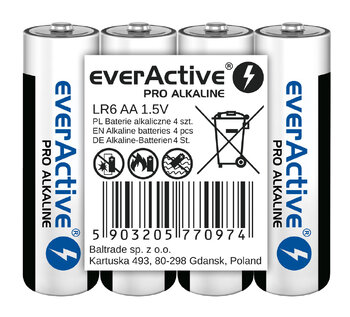
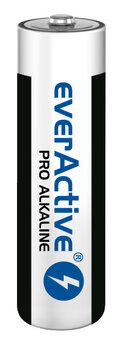
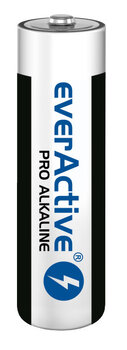
4 x AA / LR6 everActive Pro Alkaline batteries (tray)
AA Batteries by everActive packaged in sets of 4
- PRO ALKALINE is the highest line of alkaline batteries for professional applications
- capacity approx. 3000 mAh
- expiration date - 10 years from the production date
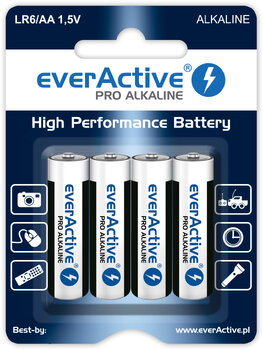
4 x AA / LR6 everActive Pro Alkaline batteries (blister)
AA Batteries from everActive packaged in sets of 4
- PRO ALKALINE is the highest line of alkaline batteries for professional applications
- capacity approx. 3000 mAh
- expiry date - 10 years from the production date
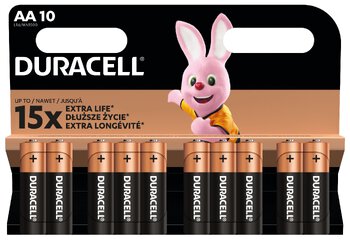
10 x AA / LR6 Duracell Duralock C&B batteries (blister)
AA Batteries by Duracell packaged in sets of 10
See more at hurt.com.pl: Alkaline AA Batteries
R6 Batteries – is it the same as AA?
Explanation:
The designation R6 is often used interchangeably with the term AA. Despite the different terminology, it refers to the same battery size; the difference lies only in the labeling method used by manufacturers. Therefore, we often encounter products on the market described as AA or R6 – both names refer to batteries of the same dimensions and properties.
AAA Batteries (R03) – „thin finger batteries”
Dimensions:
- 10.5 mm × 44.5 mm
Application:
Smaller than standard AA batteries, AAA batteries are used where space for the power source is limited. They are popular in:
- Remote controls for audio and video devices
- Wall and desk clocks
- Small electronics, such as keyboards or other small gadgets
Their compact size makes them ideal for mobile devices, where every millimeter counts.
Looking for good AAA batteries? Check out these items in our store:
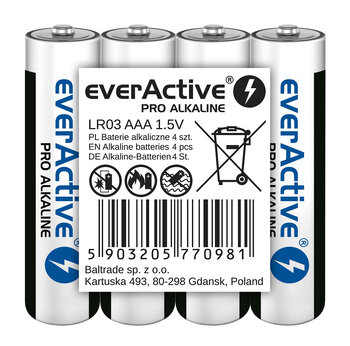
4 x AAA / LR03 everActive Pro Alkaline batteries (tray)
- PRO ALKALINE is the highest line of alkaline batteries for professional applications
- capacity approx. 1250 mAh
- expiration date - 10 years from the production date
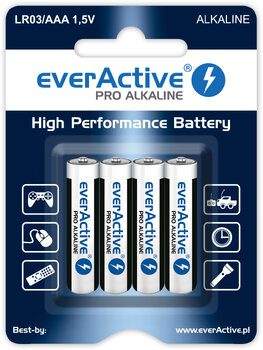
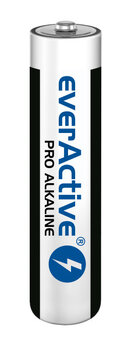
4 x AAA / LR03 everActive Pro Alkaline batteries (blister)
- PRO ALKALINE is the highest line of alkaline batteries for professional applications
- capacity approx. 1250 mAh
- expiry date - 10 years from the production date
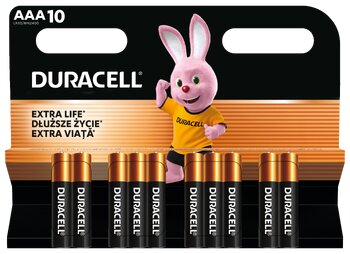
See more at hurt.com.pl: Alkaline AAA Batteries
R14 Batteries – (C)
Dimensions:
- Diameter: 26.2 mm
- Length: 50.0 mm
Application:
R14 batteries (also known as „C”). Thanks to their larger capacity than AA, but more compact size than R20, they are suitable for devices with moderate or variable power consumption, e.g.:
- Electronic toys (especially larger ones)
- Camping and hiking flashlights
- Portable speakers
- Portable radios
Their additional capacity compared to AA allows for longer operation of devices without taking up as much space as R20.
Looking for good R14 batteries? Check out these items in our store:
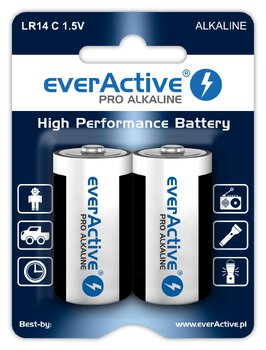
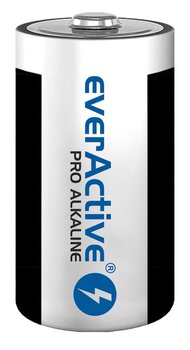
2 x C / LR14 everActive Pro Alkaline batteries (blister)
- PRO ALKALINE is the highest line of alkaline batteries for professional applications
- capacity approx. 8000 mAh
- expiration date - 10 years from the production date
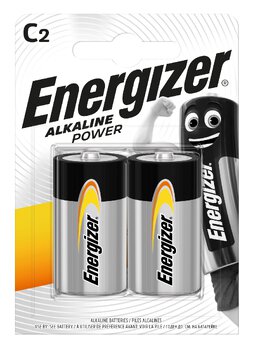
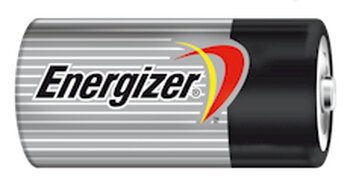
See more at hurt.com.pl: Alkaline R14 Batteries
R20 Batteries - (D)
Dimensions:
- 34.2 mm × 61.5 mm
Application:
R20 batteries are significantly larger and have a higher energy potential. They are used in devices that require higher power consumption, for example:
- Industrial flashlights and emergency equipment
- Radios and communication devices
- Toys and electronic equipment with high energy demand
Their larger size translates to a longer device operating time, which is important in professional applications.
Looking for good R20 batteries? Check out these items in our store:
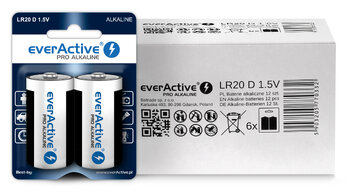
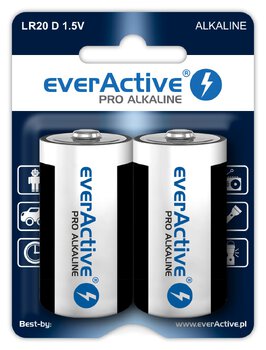
12 x D / LR20 (R20) everActive Pro Alkaline batteries (box)
- Capacity [mAh]: 17500
- Voltage [V]: 1.5
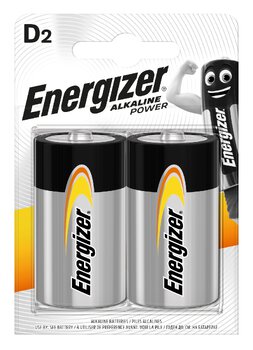
See more at hurt.com.pl: Alkaline R20 Batteries
CR2032 Battery – small but versatile
Dimensions:
- Diameter: 20 mm
- Thickness: 3.2 mm
Application:
Despite its small size, the 2032 battery is extremely popular and versatile. It finds its place in:
- Watches
- Car remote controls
- Calculators
- Other small electronic devices
Due to its compact dimensions and stable voltage, the CR2032 is trusted in applications requiring precise and reliable power supply.
Looking for good 2032 batteries? Check out these items in our store:
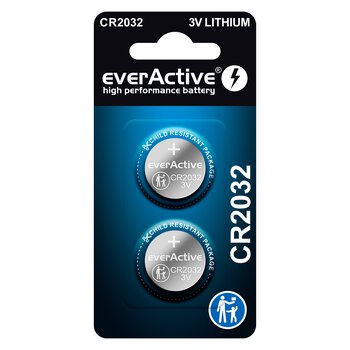
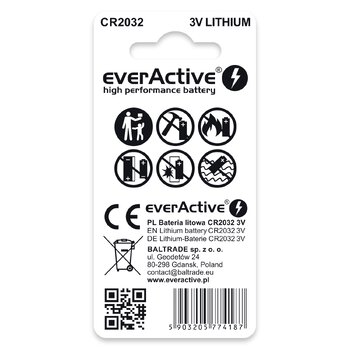
2 x lithium batteries CR2032 everActive
- Button / coin cell lithium batteries
- blister 2 pieces
- voltage [V]: 3.0
- diameter [mm]: 20.0
- height [mm]: 3.2
- capacity [mAh]: 220
- batteries with a long shelf life
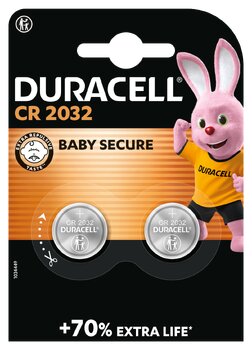
2 Duracell CR2032 lithium batteries 2BL
- Button cell / coin cell lithium batteries
- blister 2 pieces
- voltage [V]: 3.0
- diameter [mm]: 20.0
- height [mm]: 3.2
- batteries with a long shelf life
See more at hurt.com.pl: Lithium 2032 Batteries
Summary of Battery Types in a Table
Below we present a table summarizing the most important features of the discussed battery types:
| Battery Type | Dimensions | Examples of Applications |
| AAA (R03) | 10.5 mm × 44.5 mm | Remote controls, wall clocks, small electronics |
| AA (R6) | 14.5 mm × 50.5 mm | Remote controls, mice, toys, flashlights |
| R14 (C) | 26.2 mm × 50.0 mm | Toys, camping flashlights, portable speakers, radios |
| R20 (D) | 34.2 mm × 61.5 mm | Industrial flashlights, radios, high power devices |
| CR2032 | Diameter: 20 mm; thickness: 3.2 mm | Watches, car remote controls, calculators |
Technological Differences
In the world of batteries, technology is key to performance, durability, and safety of use. The most commonly encountered technological types are:
Alkaline Batteries
Advantages:
- Higher energy density
- Longer operating time at moderate power consumption
- Better leak resistance with proper use
Zinc-Carbon Batteries
Disadvantages:
- Usually lower performance and shorter lifespan
- Weaker resistance to high power demands
- Less stable voltage during discharge
Lithium Batteries
Why do they last longer?
- Higher performance: They have significantly higher energy density, allowing for longer operation of devices, even with intensive use.
- Stable voltage: Lithium provides more stable voltage throughout the entire usage period, making devices operate more efficiently.
- Resistance to extreme conditions: Lithium batteries are less prone to problems with low or very high temperatures, making them ideal for industrial and outdoor applications.
When choosing batteries for a specific application, it is worth paying attention to the technology used, as not every battery will be suitable for high power demands or operation in difficult conditions.
Rechargeable Batteries or Disposable Batteries?
The decision regarding the use of rechargeable batteries and disposable batteries is a topic that evokes many emotions. In recent years, the popularity of NiMH (nickel-metal hydride) rechargeable batteries, which provide an ecological alternative to traditional disposable batteries, has been growing.
Advantages of NiMH Rechargeable Batteries:
- Financial savings: Although the initial investment in rechargeable batteries is higher, multiple recharges allow for long-term savings.
- Environmental friendliness: Reduced use of disposable batteries means less electronic waste and benefits for nature.
- Stable performance: Rechargeable batteries often feature uniform discharge, providing stable voltage for a longer time.
- The voltage level of 1.2 V for most rechargeable batteries is maintained almost throughout the entire cycle of the battery (there is no rapid voltage drop as with batteries).
Disadvantages of NiMH Rechargeable Batteries:
- Lower capacity: Compared to alkaline batteries, some rechargeable batteries may have slightly lower capacity at lower power consumption.
- Memory effect: Although modern models are more resistant to the memory effect, improper charging can affect their performance.
- Charging time: Unlike disposable batteries, which are ready to use, rechargeable batteries require time to recharge.
- Batteries have a higher voltage level at the beginning of use (about 1.5V) than Ni-MH rechargeable batteries. However, the voltage level drops quickly in the case of batteries.
For many users, the benefits of using rechargeable batteries outweigh certain drawbacks, especially in devices with a high number of work cycles, such as computer mice. For certain applications, a good alternative (combining the advantages of batteries and Ni-MH rechargeable batteries) are lithium-ion batteries, also available in AA sizes. If you want to learn more about the differences between batteries and Ni-MH rechargeable batteries, as well as their corresponding Li-ion batteries, we encourage you to read our article:
How to Choose the Right Battery or Rechargeable Battery for Your Device?
The choice of the right battery is not random – several key factors must be considered that influence the proper functioning of the device. Below we present the most important criteria:
- Voltage:
Each device is designed to operate at a specific voltage. Make sure that the battery meets the technical requirements of the equipment, as too high or too low voltage can lead to device damage. - Capacity:
Expressed in milliampere-hours (mAh), the capacity of the battery or rechargeable battery determines the length of time the device will operate. For high energy consumption devices, choose batteries or rechargeable batteries with higher capacity. - Manufacturing Technology:
The choice between alkaline, lithium, or zinc-carbon batteries depends on the specifics of use. Lithium batteries work great in applications requiring stable voltage, while alkaline batteries are often sufficient for the average user. - Type of Device:
It is worth checking whether the manufacturer of the device recommends using specific types of batteries. Some gadgets, especially those with high energy requirements, may not function properly when using low-performance batteries.
The Most Common Mistakes When Choosing Batteries
When purchasing batteries and accessories, it is worth remembering a few frequently made mistakes that can affect the longevity of devices and the safety of their use:
- Using inappropriate batteries in high energy consumption devices:
Choosing low-performance batteries to power an industrial flashlight or radio can result in rapid discharge. - Mixing different types of batteries in one device:
Combining batteries of different technologies or charge levels can lead to uneven discharge, shortening the lifespan of both the batteries and the device. - Improper storage of batteries:
Storing in damp or too hot places can worsen battery parameters, leading to leaks or loss of capacity. It is always advisable to follow the manufacturer's recommendations regarding storage conditions.